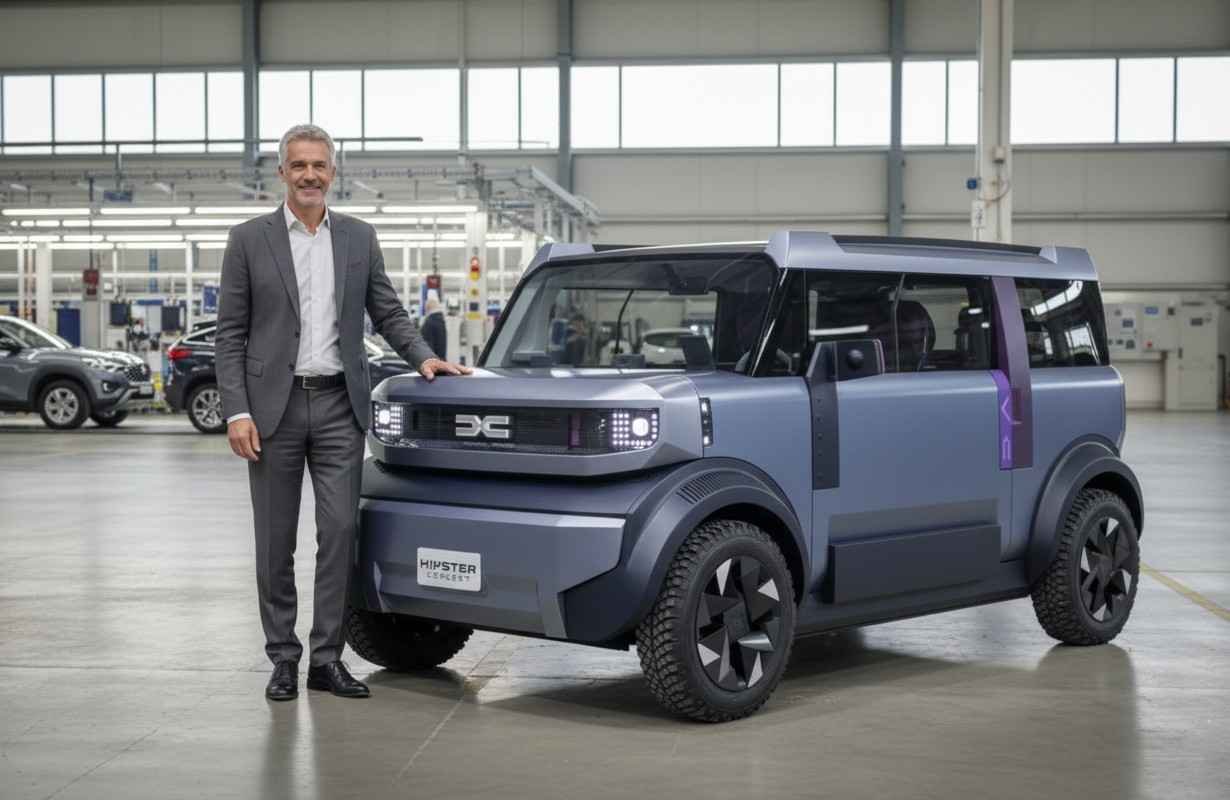
The Dacia Hipster Concept represents a new futuristic move in electric mobility—designed to be very affordable, functional, and sustainable. Presented by Dacia in 2025, the concept vehicle is here to bring simplicity back to the basics and to meet true urban and suburban mobility needs.
Main Specifications & Design
- Size & Packaging: The Hipster is a mere 3.00 meters in length, approximately 1.53 m high and 1.55 m wide. Yet, it can accommodate four full-size seats, which is unusual among super-small EVs.
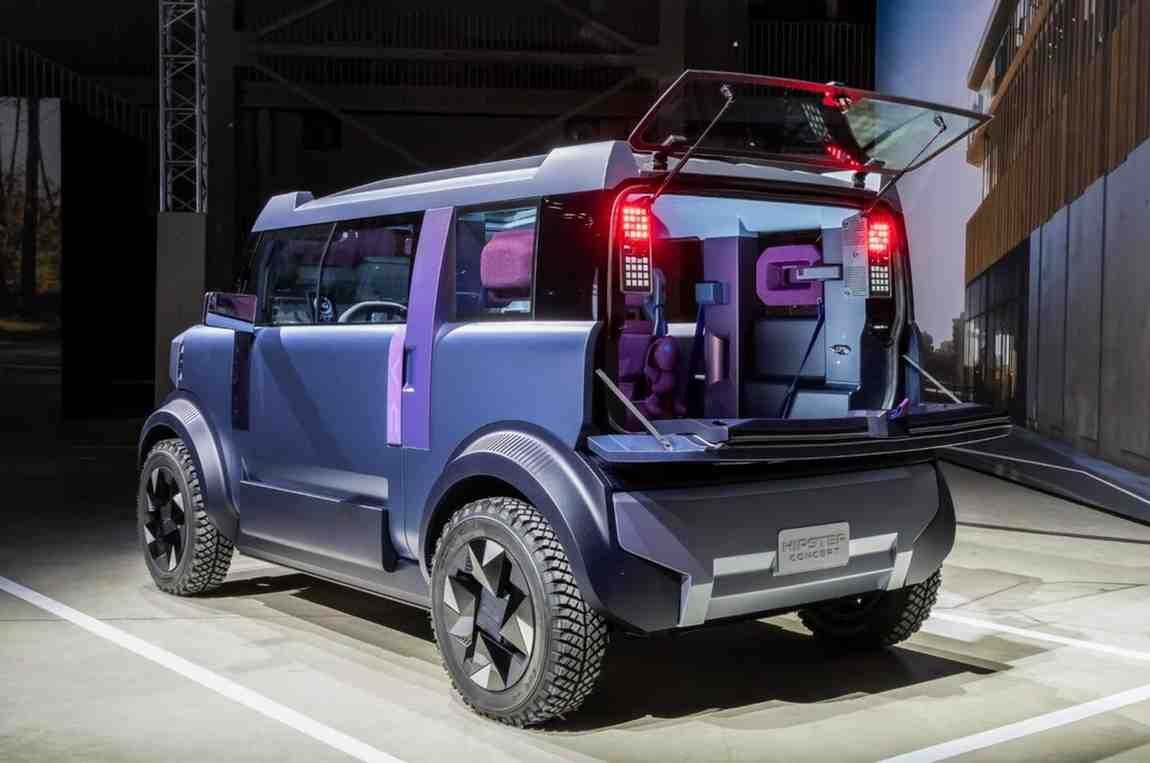
- Boot / Storage: The back seat folds. With four people on board, the boot contains around 70 litres of capacity; folded, there’s around 500 litres. That flexibility is a major sales advantage.
- Weight & Materials: The car is less than 800 kg in weight, about 20% lighter than Dacia’s Spring model. Dacia achieves this by employing lighter materials, recycled parts, minimal use of electronics, sliding windows, and even straps on doors rather than conventional handles.
- Visualised Appeal : The design is defined its “functional simplicity.” The vehicle features boxy, vertical lines, vertical (straight) windows, short (front and rear) overhangs, and solid surface elements such as side protection constructed of “Starkle®” — a partially recycled polypropylene product. A single body colour with only a few painted components serve to minimize complexity and expense.
Usage & Performance
Range & Recharging: Hipster Idea is made for daily travelers. Two weekly charges with a standard household plug are adequate for average urban or suburban driving. Although exact range figures aren’t set in stone everywhere, the assumption is sufficient for average driving every day.Speed & Driveability: Not about high-speed, but about practicality, agility, and efficiency. The maximum speed is reasonable (about 90 km/h) — sufficient for city roads and perhaps some suburban areas.
Philosophy & Market Position
- “Back to Basics” Mobility: Instead of in pursuit of increasingly more technology, luxury and ever heavier electric cars, Dacia with Hipster wants to respond to the simple question: What do people really need for mobility in the city without unnecessary frills.
- Environmental Impact: Its light construction, lower material use, less styling, and more basic electronics are all contributions of Dacia’s efforts to lower the carbon footprint throughout the entire lifecycle — production to use.
- Accessible & Inclusive: The design is such that individuals of any age can use it. Seating high up, Isofix fitting of child seats, visibility, fewer controls—all serve to make the car usable by families, young professionals, older drivers alike.
Challenges & Outlook
Though the Hipster Concept is promising, there are difficulties before it’s a production reality:
Regulatory Approval: In order to access its entire market potential, Dacia might need new regulatory classes for small vehicles in the EU with fewer compulsory features to maintain affordability.
Cost vs. Feature Trade-Offs: Streamlinings such as canvas or mesh seats, manual windows, door straps rather than handles, minimum electronics—all reduce cost and weight, but potentially compromise comfort or perception versus more feature-filled rivals.Market Acceptance: Large SUV or feature-packed car buyers might require persuading. The style is extremely minimalist; that will suit some but not all.
Final Impression
The Dacia Hipster Concept is a refreshingly practical interpretation of electric cars. In an industry where bigger batteries, more technology, and higher prices rule supreme, Hipster stakes its hopes on fundamentals: room, simplicity, recyclability, and price. If taken to production with a price that is within reach of broader segments, it might redefine what a city EV can and should do. For those seeking a small, green, simple everyday runabout, this idea very well might write the book on intelligent city electric mobility.