


Over the past 10 years, AI has quietly become a game-changer in healthcare. It’s helping with everything from spotting cancer early to organizing hospital work, AI systems are proving they can crunch medical info faster and often more spot-on than people. But early medical AI had a problem: it just followed orders. It couldn’t really “think” on its own.That’s where AI with reasoning comes in.This kind of AI is a big step up. Instead of just looking at data, these systems can connect the dots, think about the situation, and even act on their own sometimes. In medicine, this could create what some call an “AI Doctor” – a computer doc that can diagnose, reason, and plan treatments like a real doctor.
What’s Reasoning AI?
To get what an “AI Doctor” is, you need to know what “reasoning” means in this context. Normal AI models, like those that find things in medical images or analyze symptoms, use set instructions.They process data and give results, but they don’t really get the reasoning behind their results.Reasoning AI makes a change. It lets an AI system act on its own – reasoning, adapting, and deciding things based on goals, not just instructions. Think of it as giving an AI a brain, so it can judge new info, question results, and change what it does as things change.In healthcare, an AI doc wouldn’t just follow a script. Instead, it could figure out a patient’s symptoms, check their records, think about outside factors or genes, and then work through possible diagnoses – changing its approach as it gets new info.
The AI Doctor is Born
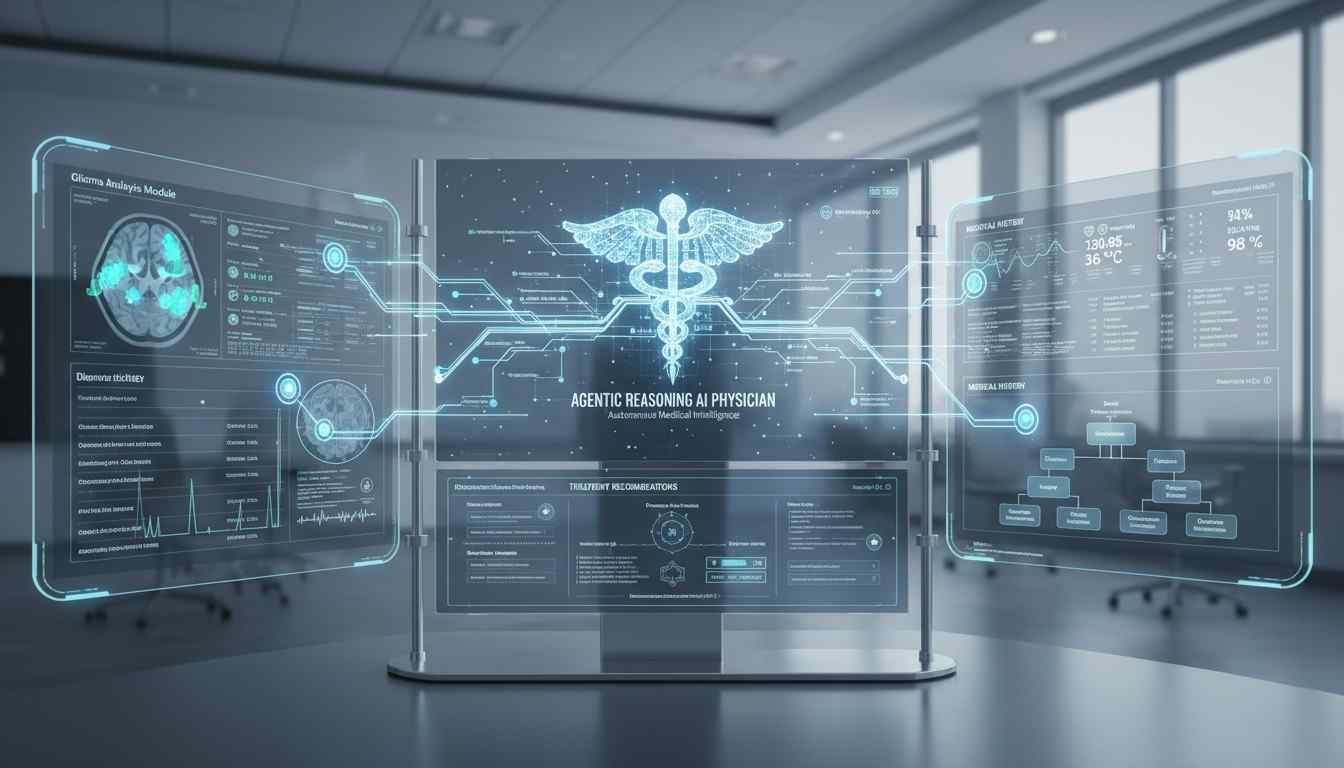
The idea of an “AI Doctor” has been around. For years, researchers and tech companies have been making computer helpers to assist doctors with things like looking at images or handling records. But these systems were like fancy calculators – exact, but limited.Reasoning gives the AI doctor a brain.It can now work through medical problems like a human, using different sources of info and learning from its choices. Imagine a patient walking into a clinic and telling an AI about their symptoms. The AI listens, checks their voice for stress, looks at past tests, compares them to current data, and then makes a logical guess before suggesting what to do next. It’s happening now.
How Reasoning AI Changes Diagnosis
One of the best things about reasoning AI in medicine is that it can see how things fit together. Normal AI might spot pneumonia on an X-ray or find weird lab results. Instead, it can reason that the pneumonia might be related to a hidden immune problem, or that the breathing issues could come from something in the environment.This improved reasoning allows for complete diagnoses, which human doctors are good at but AI has had problems with. Reasoning AI doesn’t just find patterns; it gets the situation. It can ask, “Why did this symptom start now?” or “What else could be causing it?” This kind of thinking could cut down on mistakes in diagnosis, which are a big problem in healthcare.
Real Uses
Some research places and AI startups are checking if reasoning can help patients. For example, early tests have shown that these AI systems can find uncommon diseases that normal models miss, by using lab data, images, and patient history.In some hospitals, early AI versions are being tested as medical advisors. These systems talk to patients, give early assessments, and then connect them with doctors. By working through lots of medical info, the AI can give priority to urgent cases, suggest tests, or even plan treatments – things that used to take hours for people to do.Also, drug companies are using reasoning models to create and test possible drugs.The AI’s can figure out how molecules work, which can speed up drug creation and save money and time.
Good for Doctors and Patients
AI doesn’t mean human doctors will disappear. Instead, it should make them better. Doctors can use these AI systems as smart helpers that can think for themselves, not just follow instructions.For patients, this could be a huge deal.Imagine getting a quick analysis of your symptoms, followed by an explanation of what might be happening. The AI doc could watch your health, spot small changes before symptoms appear, and suggest ways to prevent problems.In rural areas where there aren’t enough healthcare workers, an AI system could fill the gap by giving correct diagnoses and health advice all the time.
Concerns About Ethics and Safety
Like any technology, reasoning AI brings up ethical questions. Can we trust an AI to make medical choices on its own?Who’s to blame if an AI doctor messes up? How do we keep patient info safe? Experts say that being open and responsible is key. Every reasoning step an AI doctor takes must be clear – this is called “explainable AI.” Patients and doctors need to get why an AI made a decision. Without this , even the best AI systems will run into resistance.There’s also the issue of prejudice. If the AI’s info has inequalities or wrong records, it could continue those problems.Making sure training data is fair and correct is important as these systems get better.
The Future: AI Docs in Healthcare
For AI doctors to become common, healthcare needs to change.This means updating rules, changing ethical guidelines, and training workers to work with AI partners.Many think that in the near future, hospitals will use a mix of human and AI care.AI can take care of data stuff, keep an eye on patients, and find issues, so doctors can spend more time understanding patients, talking to them, and making the right calls. Governments and tech businesses are beginning to set up rules for testing and using these AI systems Some countries are trying out smart AI in telemedicine and emergency rooms.
The Future of Smart Medicine
An “AI doctor” might sound like science fiction, but it’s where medicine is headed. Like stethoscopes once changed diagnosis, reasoning AI could become a tool for every doctor.Soon, we might see AI doctors that constantly learn worldwide from interactions with patients, which would improve their reasoning and predictions every day. They could spot diseases earlier, treatments to genes, and even how a treatment will affect a patient before it’s given.The goal is to make human ability better. By uniting human with AI, healthcare could become proactive, available, and efficient.
Conclusion
Reasoning AI is a step in medical tech.It’s not just about making things automatic; it’s about machines actually understanding you As researchers improve these systems, we could see a future where an AI starts your doctor’s visit by listening, understanding, and helping you feel better.